You’re ready to start something new, and you’re looking for dental assistant training near me — somewhere close, practical, and realistic for your life. That’s a solid instinct. Local training keeps costs down, keeps your schedule manageable, and connects you to the same dental community where you’ll eventually work.
But “near me” shouldn’t be the only factor. What the program teaches, how it trains you, and whether it actually prepares you for a real job matter just as much as proximity. Here’s how to evaluate your local options and find one that’s worth your time.
Why training locally matters
You build connections in your market
The dentists and staff you train with are part of your local dental community. Those relationships can lead directly to job offers, referrals, and professional connections that benefit your career for years.
You understand your local job market
Every area has a slightly different dental landscape — the mix of general and specialty practices, the presence of DSOs, the demand for trained assistants. Training locally gives you insight into the market you’ll work in.
You reduce costs and logistical barriers
No relocation, no long commute, no uprooting your life. You train where you live and start working where you trained.
You can keep working during training
Programs near home — especially those with flexible schedules — make it possible to keep your current job while training for your next career.
What to look for in local dental assistant training
1. Hands-on training in real dental offices
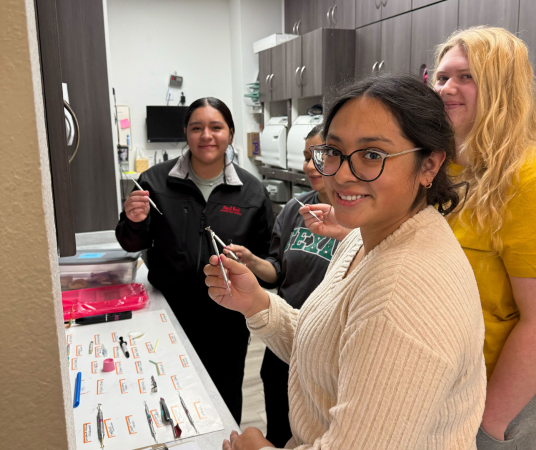
This is the most important factor. Some programs train you in campus classrooms with models and simulations. The strongest programs put you inside actual working dental offices where you practice with real instruments, real equipment, and real clinical workflows.
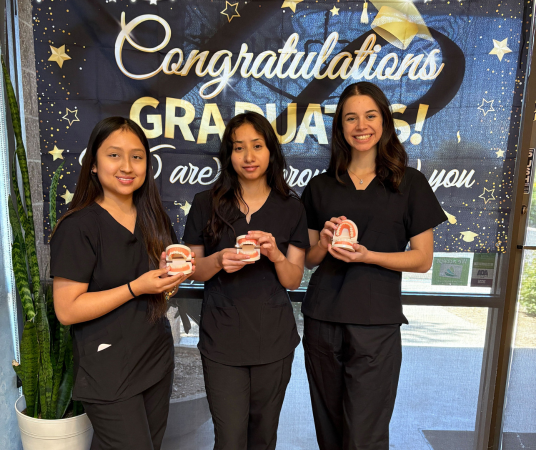
Grand Junction Dental Assistant School trains students in real dental offices in Grand Junction, meaning your experience starts in the same environment you’ll work in after graduation.
2. A focused, realistic timeline
Twelve weeks is enough to cover every essential clinical and administrative skill — when the curriculum is designed well. Longer programs often include general education courses that don’t make you a better dental assistant.
3. Certification preparation
The Registered Dental Assistant (RDA) credential increases your earning potential and makes you more competitive. Training that includes exam prep gives you a head start on certification.
4. Transparent, affordable cost
Know the total cost before enrolling — tuition, materials, everything. Programs that cost under $5,000 with payment plans available mean you can graduate without student loans.
5. Career support after graduation
Job search guidance, resume help, interview prep, and employer connections should be part of the program. The transition from training to employment should be supported, not left entirely to you.
What dental assistant training covers
A strong dental assistant training program covers both the clinical and administrative sides of the role:
Clinical skills
- Chairside assisting — four-handed dentistry, instrument passing, suction, tissue retraction
- Dental X-rays — proper technique, sensor positioning, radiation safety, image evaluation
- Infection control — sterilization, autoclave operation, OSHA compliance, operatory disinfection
- Dental materials — impressions, cements, composites, temporary restorations
- Patient care — communication, anxiety management, aftercare instructions
Administrative skills
- Scheduling and patient flow management
- Charting, record-keeping, and EHR documentation
- Insurance verification and basic billing
- Phone communication and intake processes
- HIPAA compliance
Certification preparation
RDA exam content woven throughout the curriculum so you’re ready to sit for the exam shortly after graduating.
The 12-week training timeline
Here’s roughly what to expect in a 12-week dental assistant program:
Weeks 1–4: Foundation
- Dental terminology and anatomy
- Infection control theory and practice
- Introduction to instruments and materials
- Patient communication fundamentals
- X-ray theory and safety
Weeks 5–8: Clinical skills
- Chairside assisting during procedures
- Hands-on radiography technique
- Dental materials preparation and handling
- Sterilization mastery and operatory management
- Administrative skills and office workflows
Weeks 9–12: Advanced skills and certification prep
- Complex procedure assisting
- Advanced radiography techniques
- Comprehensive skills review
- RDA exam preparation
- Career readiness — resume building, interview skills, job search strategies
What dental assistants earn near Grand Junction
Salary varies by location, but here’s the national picture (BLS, Indeed, Glassdoor — 2026):
- Entry-level: approximately $33,000–$40,000/year
- National median: approximately $46,000–$48,000/year
- Experienced / specialty: $52,000–$62,000+/year
- RDA certification premium: approximately $2,000–$6,000+ more per year
Your local salary will depend on cost of living, demand, and practice type — but the career consistently provides stable, competitive income.
Common questions about starting locally
“Do I need experience?”
No. Programs like Grand Junction Dental Assistant School are designed for complete beginners with no prior dental or healthcare background.
“Can I work while training?”
Many 12-week programs are structured to accommodate working students. Check the weekly schedule to confirm it fits your life.
“How soon will I be working after training?”
Most graduates begin working within 2–4 weeks of completing their program and passing certification exams. Total timeline from enrollment to first paycheck: approximately 4–5 months.
Career growth from here
Your first dental assistant position is just the beginning. With experience and certification:
- Lead or head dental assistant — managing the clinical team, with higher pay and responsibility
- Specialty practices — oral surgery, orthodontics, periodontics, pediatric dentistry — often at $5,000–$10,000/year more than general practice
- Office management — transitioning into practice administration
- Expanded functions — taking on advanced clinical duties with corresponding pay increases
- Stepping stone — using DA experience as a launchpad for dental hygiene or other healthcare careers
The career has real upward mobility — and it starts with the right training.
Why dental offices near Grand Junction are hiring
The demand for dental assistants isn’t slowing down:
- BLS projects continued employment growth through 2032
- Population growth and increased insurance coverage mean more patients seeking dental care
- Dental offices are expanding, creating new positions for trained assistants
- Retirements and career transitions create ongoing openings
When you train locally, you’re positioning yourself in the same market where these opportunities exist.
What to expect on your first day
Starting a new training program — especially in healthcare — can feel intimidating. Here’s what makes the first day manageable:
- You begin with foundational concepts — dental terminology, anatomy basics, and infection control theory. Not advanced clinical procedures.
- Instructors understand that most students are complete beginners and design the early curriculum accordingly.
- You meet other students in the same position — career changers, working adults, and people exploring healthcare for the first time.
- The training environment is supportive, not competitive. Everyone is there to learn.
By the end of the first week, the unfamiliarity starts to fade, and the path forward becomes clear.
The total investment — time and money
Here’s the realistic picture:
- Training: 12 weeks
- Cost: Varies by program — accelerated programs are typically under $5,000 with payment plans available
- Certification: RDA exam shortly after graduation
- Job search: 2–4 weeks for most graduates
- Total timeline: approximately 4–5 months from enrollment to employment
For a career that pays $46,000–$48,000/year at the median — with growth to $52,000–$62,000+ — the time and money invested are modest.
Start your training at Grand Junction Dental Assistant School
Twelve weeks. Real dental office experience. Certification preparation. And a price designed to let you start your career without debt.