What Is The Difference Between On Campus And Online Dental Assistant Programs?
Choosing how you’ll train to become a dental assistant is one of the first big decisions on your career journey. Today’s students have more options than ever—some prefer traditional, on-campus instruction, while others want the flexibility of online learning.
At Grand Junction Dental Assistant School, both convenience and competence matter. The program’s hybrid model blends online coursework with hands-on in-office training, designed to offer the best of both worlds. Understanding the differences between on-campus and online programs can help you make the right choice for your learning style and career goals.
On-Campus Programs: Immersive and Interactive
Traditional, on-campus dental assistant programs are taught in physical classrooms and labs. Students attend in person for all instruction, often at a local college or trade school.
The benefits are clear: immediate feedback from instructors, peer collaboration, and structured learning environments. You practice using instruments and equipment directly under supervision, developing hands-on skills through repetition.
However, this format can also be time-consuming. Full-time, on-campus programs may last nine months to a year and often require fixed daily attendance—challenging for working adults or parents balancing multiple responsibilities.
The program manager at Grand Junction explains, “Many of our students come from busy lives. They want the hands-on training of an in-person course but need the flexibility that traditional programs can’t provide.”
Online Programs: Flexible but Limited
Online programs have grown in popularity due to convenience. Students can complete lessons, quizzes, and discussions from home, often at their own pace.
For self-motivated learners, this flexibility can be appealing. Yet dentistry is a tactile profession—something that can’t be mastered entirely through a screen. Without in-person labs, students may struggle to apply theoretical knowledge to real patient care.
That’s why Grand Junction Dental Assistant School’s hybrid model combines the accessibility of online coursework with live, in-office labs each week.
The Hybrid Model: A Balanced Solution
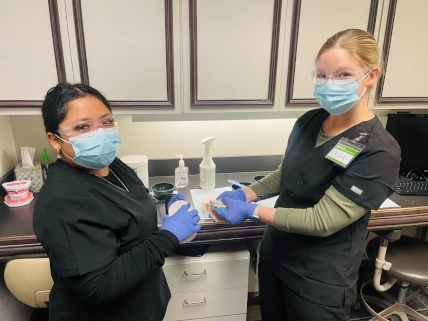
The hybrid approach merges digital learning with practical application. Students complete online lessons covering anatomy, infection control, and dental terminology, then attend in-person sessions in a functioning dental office.
Each lab session allows them to practice what they studied—passing instruments, mixing materials, or taking impressions—under the guidance of experienced instructors.
This method maximizes flexibility while ensuring students graduate with the muscle memory and confidence that only real experience can build.
The Role of the Externship
Another key difference lies in externship availability. Many fully online programs don’t include externships, leaving students to find clinical experience independently.
At Grand Junction Dental Assistant School, the externship is built into the curriculum. Each student completes 40 hours at a local practice, gaining real-world exposure that strengthens both résumés and job readiness.
Comparing Outcomes
Graduates from hybrid programs tend to transition into employment faster than those from purely online models. Employers often prefer candidates who’ve already trained in live dental settings, reducing the need for extensive onboarding.
On-campus graduates, meanwhile, may benefit from deeper instructor relationships but spend more time in school before entering the workforce.
The best choice depends on your learning style and schedule—but for many modern students, hybrid training offers an ideal balance between flexibility and readiness.
Technology Meets Human Connection
Even though the Grand Junction program includes online lessons, the emphasis remains on human connection. Students interact with instructors during labs and learn the communication skills essential for patient care.
As the program manager says, “We believe in technology as a tool, not a replacement. Our students learn through a blend of convenience and connection.”
In the end, the difference between on-campus and online programs comes down to experience. Dental assisting is about people—and the hybrid model ensures you graduate not just knowledgeable, but capable and confident in the real world.
You're 12 weeks from the dental assistant career you deserve.